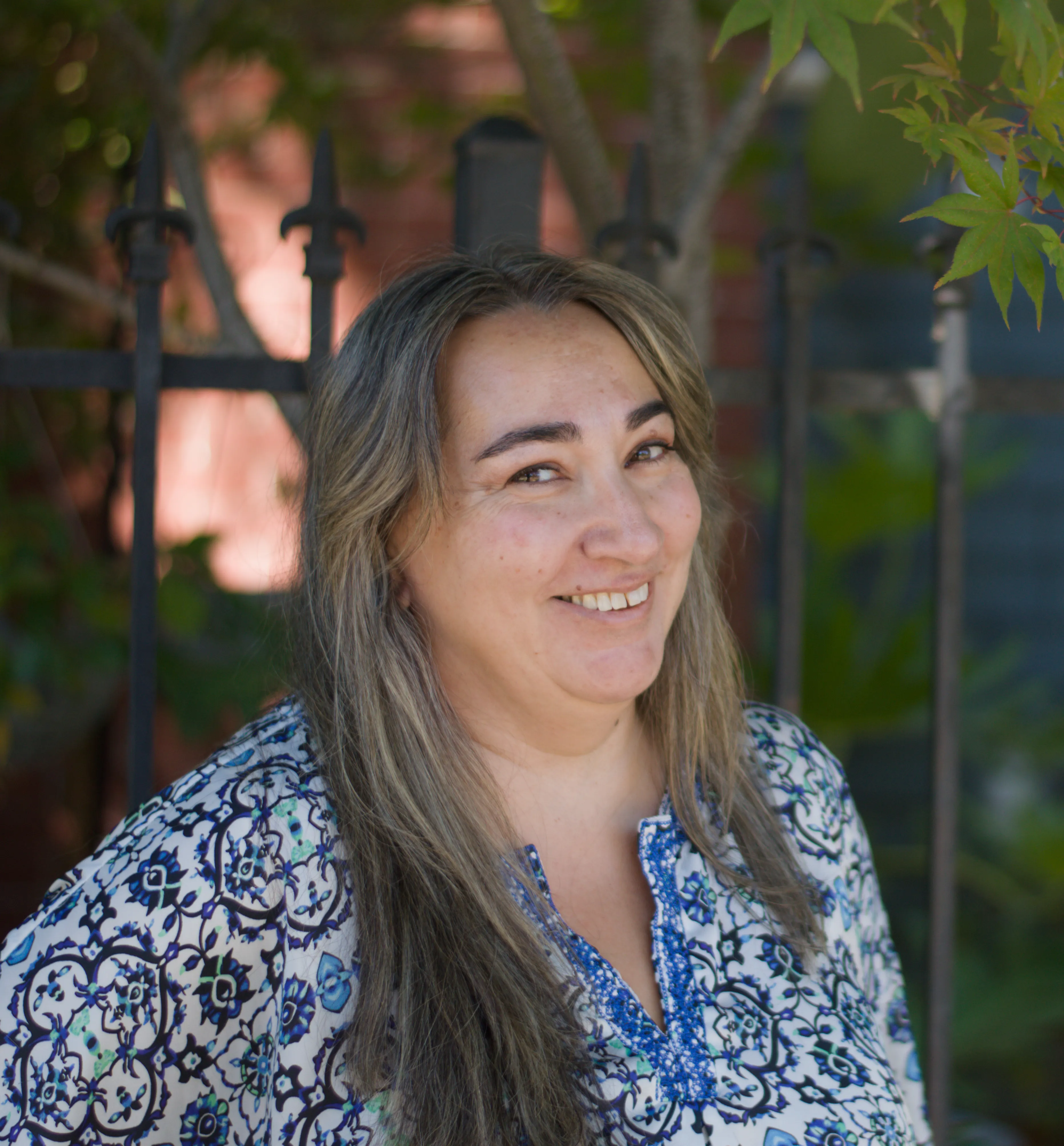
Nazzy Pakpour, Ph.D.
CEO, Yeast Bay Bio
Fear can’t be the only reason why I don’t do something. I want to move towards things, not just avoid them. When I’d ruled out all the other things it could be, and I was just left with “I’m scared,” then I had to do it. That’s basically what it came down to.
I came across the papers that were using this approach in mosquitoes, and my initial idea was to do it in agriculture. But after some research, I understood why that was a market that didn’t really make sense. And I knew mosquitoes didn’t necessarily make sense because so much of what is developed for mosquitoes is about infectious disease control, which unfortunately doesn’t get as much funding as it should. So I started thinking, what’s an insect whose control does have a lot of funding behind it? And because I’d worked on mosquitoes for most of my career, I was always in medical entomology and urban entomology, and I realized cockroaches and ants are perennial problems and nobody’s done anything new for these guys in 30 years! And resistance is increasing, they’re becoming more and more of a problem. And it seemed like a really big market that nobody else was working on. Something like 90% of the cockroaches in California are resistant to all the over-the-counter stuff, as well as a lot of the stuff that pest control operators use. At the same time, what we’re learning about those chemicals is just how much more dangerous they are to our health and our ecosystem’s health.
So I knew I had a good opportunity, I just had to decide if I’d take it. With decisions like these, if you wait until you’re sure, you’ll just keep waiting forever for the right moment. I think I’ve generally always been a person that throws myself off a cliff and believes I’ll grow wings on the way down. And I think I’ve done that enough times that I feel more confident about it. I was a professor who left academia to join industry. I’ve had a divorce. And when you take leaps like that, those are significantly more scary than this. So starting a company didn’t seem that hard.
One point I always make is that I am from a privileged background in the sense that my dad was able to help me with the funds so that I could quit my job and do what I wanted to do. I matched it with what I had in savings and what I pulled out of retirement, but I totally understand that that’s not something that everybody has. And I just want to be very clear that I had my father’s help because so often with startups, people present as if they did it all by themselves, and you look closer and their parents were rich. So I don’t want to present as if I did this all by myself without help financially, and I wouldn’t have been able to do it without my father’s help.
I think particularly in biotech, having early access to funding is important. Because you can’t start a company while you’re working at another company. In a lot of tech companies, they’re okay with you starting something while you work there, and it’s very accepted. But in biotech, they own your ideas. So you literally have to quit and not have an income to be able to pursue your own ideas. And this becomes a big barrier to entry. Maybe an unacknowledged barrier to entry.
I think fundamentally for me and Lisa (my co-founder), we both work very hard individually to try to make the world a better place. We volunteer, we donate, and I don’t think either one of us thought that we’d ever have the opportunity in our lives to structurally change things for the better. Like on a really large scale, change the way we do things. And one of the reasons we were willing to do this is that we both believe that we can fundamentally change the amount of pesticides in the world. Decrease them. And I just don’t think you get many opportunities like that in life.